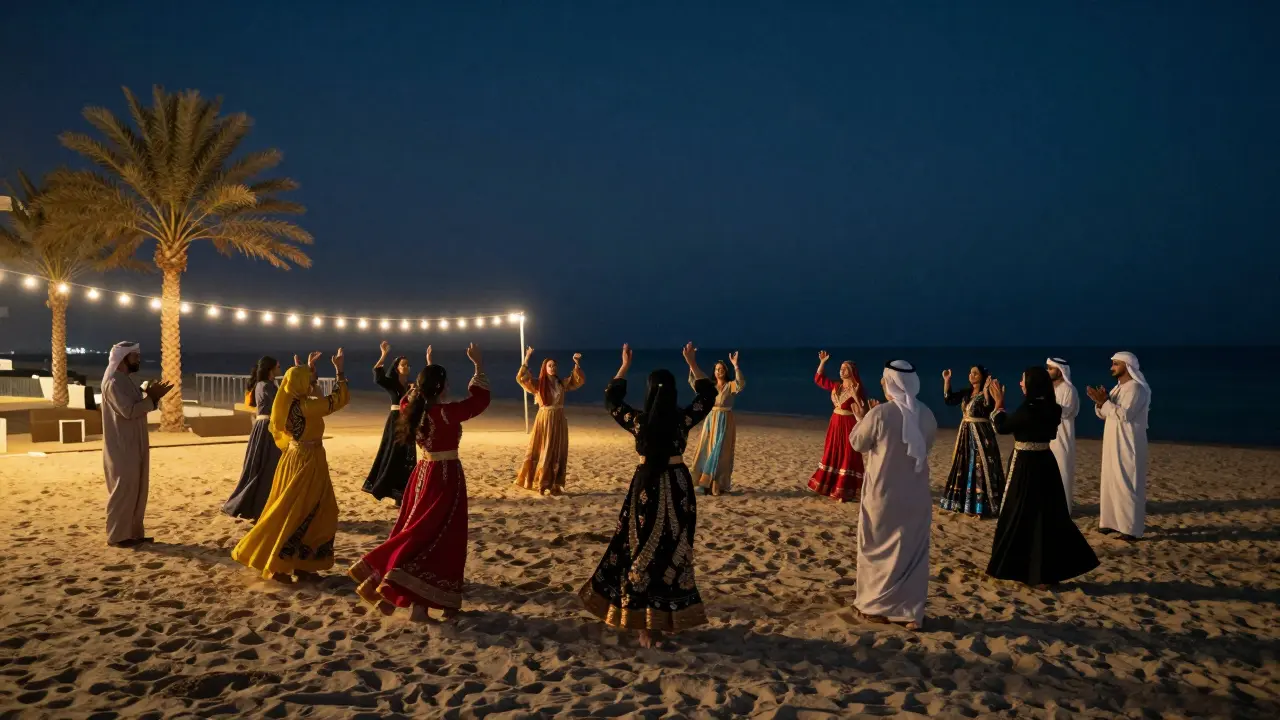
Abu Dhabi doesn’t just shut down when the sun goes down. While it might not scream party city like some global hotspots, its nightlife is a quiet, confident celebration of music, dance, and culture - woven into the fabric of the city’s identity. You won’t find rowdy street parties or 24-hour clubs packed with tourists shouting over EDM. Instead, you’ll find rooftop lounges with live oud music, private art galleries hosting midnight jazz sessions, and beachside shisha spots where Emirati families gather under string lights, laughing as traditional Khaleeji dancers move to the rhythm of the tabla.
Where the Music Really Lives
Abu Dhabi’s musical soul isn’t found in nightclubs with flashing lights - it’s in the intimate venues that feel more like secret gatherings. The Manarat Al Saadiyat hosts weekly live performances blending classical Arabic music with modern jazz. Local musicians like Dalia El Masri have turned these nights into something special: a fusion of Arabic scales and saxophone solos that make you forget you’re in a desert capital. You won’t find these events advertised on Instagram ads. You hear about them through word of mouth, or from the concierge at your hotel who knows the real pulse of the city.
For something more rhythmic, head to Al Maqam in the Cultural District. It’s not a club. It’s a performance space that opens after 9 PM. On Fridays, you’ll see Emirati youth dancing the Ardah - a traditional sword dance - not as a tourist show, but as a living tradition. The drums don’t stop until midnight, and the crowd? Mostly locals in crisp thobes and abayas, clapping in perfect time. No bouncers. No cover charge. Just community.
Dance That Tells a Story
Dance in Abu Dhabi isn’t about showing off. It’s about connection. The Khaleeji dance, with its flowing skirts and subtle hand movements, isn’t performed for cameras - it’s performed for family. At Al Bateen Beach on weekends, you’ll find small circles forming after sunset. Women in colorful dresses sway in unison, their movements echoing generations of coastal traditions. Men stand nearby, clapping in complex patterns that sound like rain on metal roofs. Tourists often watch from a distance, thinking it’s a performance. It’s not. It’s life.
There’s also a growing underground scene of contemporary dance. Groups like Al Rawabi Collective host monthly shows in converted warehouses near Al Raha Beach. These aren’t flashy productions. They’re raw, emotional pieces about identity, migration, and belonging. One recent performance used only the sound of footsteps and the rustle of fabric - no music, no lights. Just movement. And silence. People left crying. Not because it was sad. Because it was true.
Culture Isn’t a Show - It’s the Atmosphere
Forget the idea that culture means museums and guided tours. In Abu Dhabi, culture lives in the air you breathe after dark. Walk into Al Mina Souk at 10 PM and you’ll smell cardamom coffee brewing, hear the clink of copper teapots, and see elderly men playing backgammon under lanterns. This isn’t a tourist trap. It’s a neighborhood ritual. The same shop owners who sold spices at noon are now serving sweet dates and Arabic coffee to friends who dropped by after work.
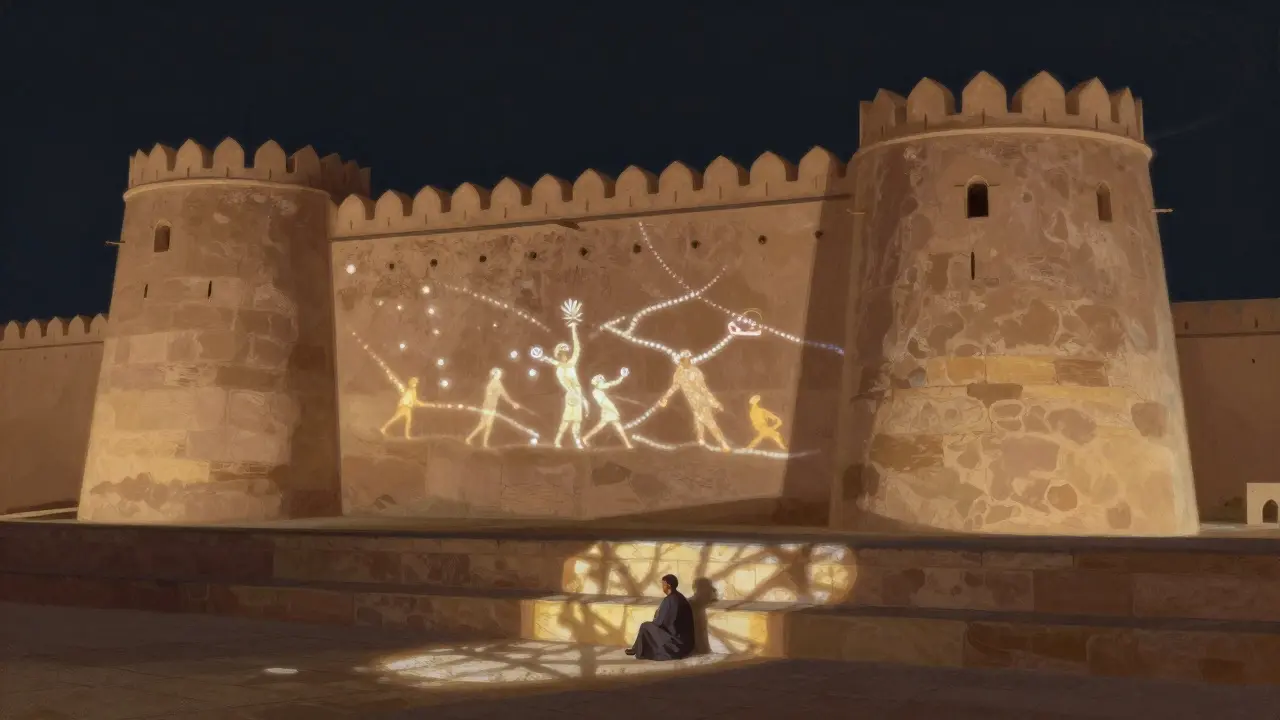
At Qasr Al Hosn, the historic fort, Friday night light projections turn ancient walls into storytelling canvases. No crowds. No noise. Just shadows dancing across sandstone, telling tales of Bedouin traders, pearl divers, and the first oil workers. You can sit on the steps and listen. No ticket needed. Just respect.
Bars That Don’t Feel Like Bars
Yes, there are bars. But they’re not what you expect. Barasti at Yas Beach isn’t a loud club - it’s a beachside lounge where Emiratis and expats sit on low cushions, sipping mocktails made with hibiscus and rosewater. The music? A curated mix of Lebanese pop, Nigerian afrobeats, and Arabic folk remixes. No DJs spinning tracks. Just a sound engineer who knows how to blend cultures without drowning them.
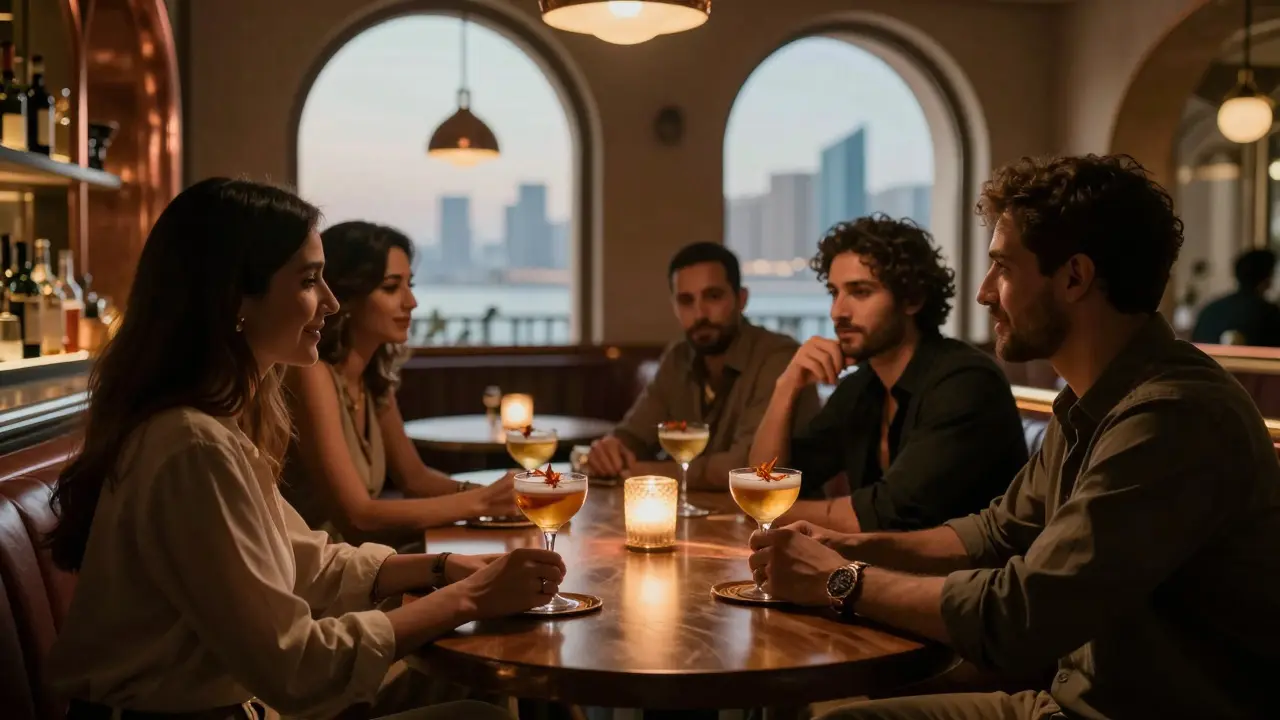
At Al Dawaar, inside the Emirates Palace, the bar doesn’t even have a sign. You need a reservation. The drinks? Crafted with local ingredients - date syrup, saffron, camel milk gin. The vibe? Quiet elegance. No flashing neon. No bottle service. Just people talking. About art. About politics. About their kids. It’s the kind of place where you’ll hear someone say, “I grew up fishing off this coast,” and realize you’re sitting next to someone who remembers Abu Dhabi before the skyscrapers.
What You Won’t Find - And Why That Matters
You won’t find neon-lit strip clubs. You won’t find drunken college students screaming into microphones. You won’t find 3 AM parties where the only thing louder than the music is the chaos. That’s not because Abu Dhabi is boring. It’s because the city has chosen a different rhythm. Its nightlife is built on dignity, not distraction.
There’s a reason why alcohol is served only in licensed venues. It’s not a restriction - it’s a filter. It keeps the energy focused. People come here to experience something meaningful, not to escape it. And that’s why, after a night out in Abu Dhabi, you don’t feel drained. You feel enriched.
How to Experience It Right
If you want to get it right, follow these simple rules:
- Go on a Friday or Saturday - that’s when the city breathes deepest after dark.
- Dress modestly. Even at rooftop bars, shoulders and knees are expected. It’s not about rules - it’s about respect.
- Ask locals for recommendations. Don’t rely on Google Maps. The best spots aren’t listed.
- Try a mocktail before you order alcohol. Many are made with ingredients you’ve never tasted - like tamarind, pomegranate molasses, or dried limes.
- Stay past midnight. That’s when the real magic happens - the music slows, the lights dim, and the conversations get deeper.
Why Abu Dhabi’s Nightlife Is Different
Most cities sell nightlife as escape. Abu Dhabi sells it as belonging. You don’t come here to lose yourself. You come to find a rhythm that’s been steady for centuries - one that still beats under the glow of LED lanterns and the quiet hum of a daf drum. It’s not loud. It’s not flashy. But it’s alive. And if you listen closely, you’ll hear the heartbeat of a city that knows who it is - and isn’t afraid to show it after dark.
Is Abu Dhabi nightlife safe for tourists?
Yes, Abu Dhabi’s nightlife is one of the safest in the region. Public spaces are well-lit, police presence is visible but unobtrusive, and most venues have strict dress codes and ID checks. Alcohol is only served in licensed areas, and public intoxication is not tolerated. As long as you respect local customs - dressing modestly and avoiding public displays of affection - you’ll have a smooth, secure experience.
Can I drink alcohol in Abu Dhabi nightlife spots?
Yes, but only in licensed venues like hotels, bars, and restaurants. You can’t buy alcohol from supermarkets or drink it on the street. Most places require you to show your passport or residency ID. The legal drinking age is 21. Many venues now offer high-quality non-alcoholic options, including artisanal mocktails made with local ingredients like dates, rosewater, and hibiscus.
What’s the best time to experience Abu Dhabi nightlife?
Friday and Saturday nights are when the city truly comes alive after dark. Many cultural events, live music sessions, and beachside gatherings happen on weekends. Evenings start slow - dinner around 8 PM, then music or events from 9 PM onward. The real magic happens after midnight, when crowds thin out and conversations get more personal. Avoid weekdays unless you’re looking for quiet lounges or art openings.
Are there any free nightlife experiences in Abu Dhabi?
Absolutely. Many cultural experiences are free and open to the public. Qasr Al Hosn’s Friday night projections, Al Mina Souk’s evening atmosphere, and beachside gatherings at Al Bateen are all free to enjoy. You can also walk along the Corniche after sunset - it’s packed with locals strolling, families picnicking, and street performers playing traditional instruments. No tickets needed. Just bring curiosity.
How does Abu Dhabi nightlife compare to Dubai’s?
Dubai’s nightlife is loud, global, and designed for spectacle - think rooftop clubs, celebrity DJs, and bottle service. Abu Dhabi’s is quiet, local, and rooted in tradition. You won’t find 24-hour parties here, but you’ll find deeper connections. Dubai sells entertainment. Abu Dhabi offers belonging. If you want to dance to house music until sunrise, go to Dubai. If you want to sit under the stars listening to an oud player tell a 300-year-old story, Abu Dhabi is where you belong.
Abu Dhabi doesn’t need to shout to be heard. Its nightlife speaks in whispers - through the strum of a string, the sway of a dress, the warmth of shared coffee. And if you’re lucky enough to be there when it’s quiet, you’ll realize: this isn’t just a place to go out. It’s a place to come home to.