Abu Dhabi doesn’t have sex massage clinics on every corner like some cities do. In fact, if you’re looking for one, you’re already walking into a legal gray zone-and one that’s tightly controlled by local laws and deep-rooted cultural values.
There’s no such thing as a legal sex massage in Abu Dhabi
Let’s start with the hard truth: any service advertised as a "sex massage" in Abu Dhabi is illegal under UAE law. The country follows strict interpretations of Islamic law, and any form of sexual activity outside of marriage is prohibited. That includes paid sexual services, even if they’re wrapped in the language of "therapeutic massage" or "relaxation."
Police have shut down dozens of establishments over the last five years that claimed to offer "traditional Emirati massage" or "Ayurvedic healing." In 2023 alone, authorities raided 17 spas in the Al Reem and Al Maryah Island areas after receiving reports of inappropriate conduct. These weren’t hidden back-alley operations-they were upscale venues with online bookings and professional websites.
The UAE doesn’t distinguish between "harmless" and "explicit" sexual services. If money changes hands for physical contact that goes beyond standard massage techniques-like touching intimate areas, prolonged skin-to-skin contact, or suggestive behavior-it’s considered prostitution. And prostitution carries a minimum sentence of one year in jail, plus deportation for foreigners.
What passes for "massage" in Abu Dhabi?
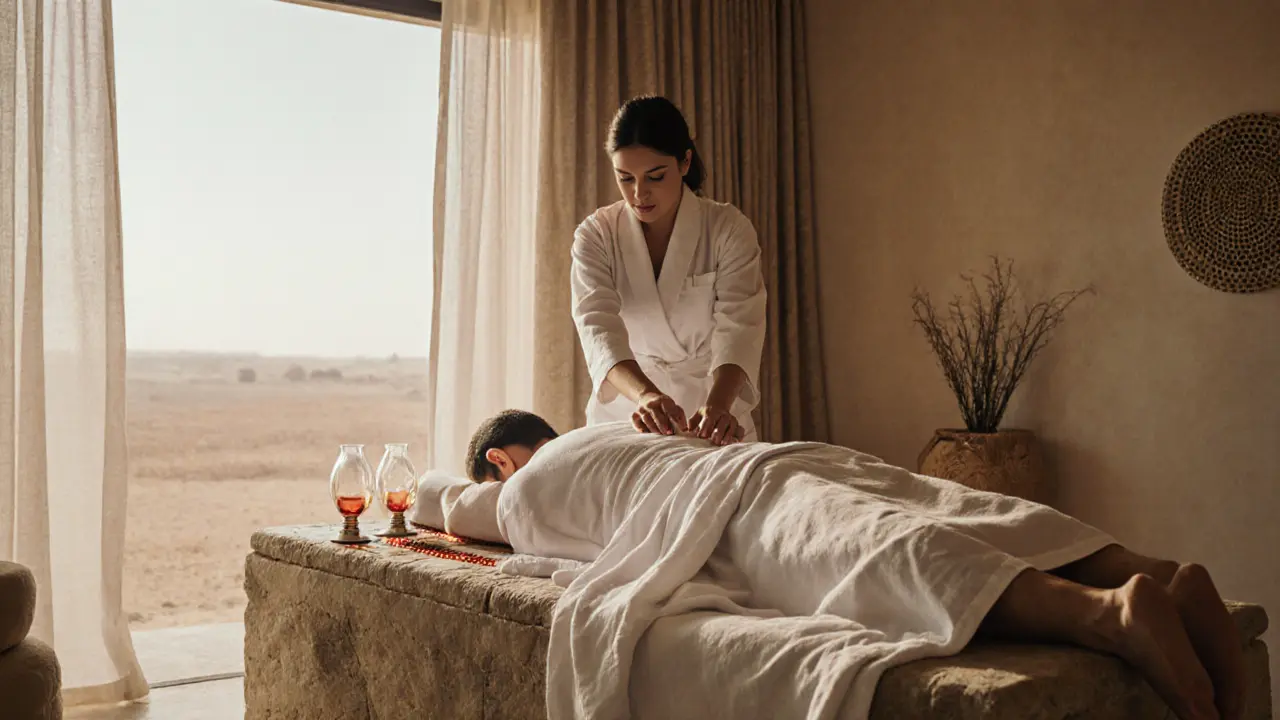
Abu Dhabi has a thriving wellness industry, but it’s built on tradition, not titillation. Traditional Arabic massage, known as "Hijama" or "cupping," focuses on pressure points along the back and limbs. It’s used to relieve muscle tension, improve circulation, and aid recovery after physical strain. Many hotels and resorts offer this as part of their spa packages.
Another common practice is "Shiatsu," adapted from Japanese techniques and popular in luxury hotels like the Emirates Palace and St. Regis. These sessions are conducted in private rooms with full clothing (or provided robes), no oils on sensitive areas, and therapists trained to maintain professional boundaries.
What you won’t find: dim lighting, music with sensual rhythms, or therapists who ask you to undress beyond your comfort level. If a place suggests you remove all clothing or offers "private sessions" with extra charges, that’s a red flag-not a service.
Why the confusion? Cultural myths and tourist traps
Many visitors come to Abu Dhabi expecting a version of what they’ve seen in movies or heard from friends in Thailand or Bali. They assume that because the UAE is modern, it must be permissive. That’s not how it works.
The country’s tourism board actively promotes family-friendly experiences: desert safaris, cultural museums, beach resorts, and heritage sites. Ads for "romantic getaways" or "couples’ retreats" are common, but they never mention anything beyond Swedish or aromatherapy massage. When tourists hear "luxury spa" and assume it includes sexual services, they’re misreading the context.
Some local businesses exploit this misunderstanding. They’ll list their services as "intimate relaxation" or "full-body healing" on third-party booking sites, knowing international visitors might click through hoping for something more. When you arrive, they’ll claim it’s "just a massage" and that you’re "misunderstanding the culture." That’s not cultural difference-it’s deception.
What happens if you try?
People have been arrested for trying to pay for sex massage in Abu Dhabi-even if they didn’t touch anyone. In 2022, a British tourist was detained after asking a spa receptionist if they offered "special services." He didn’t even book a session. The staff reported him.
Security cameras are everywhere. Hotels and spas are required to log all guest entries and exits. Staff are trained to report suspicious behavior. Even asking a question like, "Can I get a massage with a female therapist who’s more... personal?" can trigger an alert.
There’s no warning. No first offense exception. No leniency for "not knowing the rules." If you’re caught, you’ll be taken to a police station, held for questioning, and likely deported after a court hearing. Your passport will be flagged in the UAE’s immigration system. You may never be allowed back.
What should you do instead?
If you’re looking for relaxation, Abu Dhabi has plenty of options that are legal, safe, and genuinely soothing.
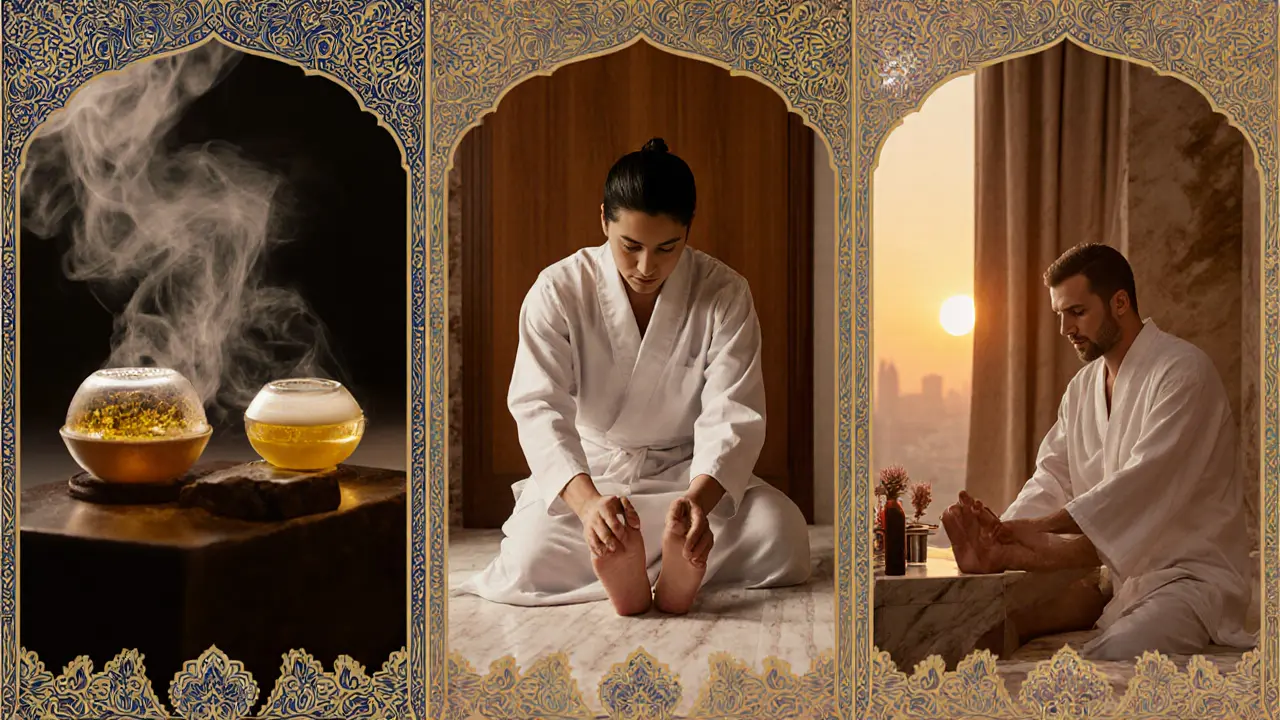
- Al Raha Beach Spa at the Ritz-Carlton offers traditional Arabic cupping with certified practitioners.
- Spa at The St. Regis uses heated stone therapy and herbal wraps based on regional ingredients like dates and rosewater.
- Yas Spa on Yas Island combines Turkish hammam rituals with modern hydrotherapy.
All of these places have clear policies: no nudity beyond what’s necessary for treatment, no private one-on-one sessions without a third party present, and no physical contact outside of approved therapeutic zones.
Book through official hotel websites or trusted platforms like Booking.com or Tripadvisor. Read reviews carefully-look for mentions of "professional," "respectful," or "strict boundaries." Avoid any place that uses words like "intimate," "private," or "exclusive experience" in their service descriptions.
Respect the culture-or pay the price
Abu Dhabi isn’t trying to be like Dubai. It’s proud of its conservative identity, even as it builds skyscrapers and hosts global events. The people here value dignity, privacy, and adherence to tradition. What might seem like a harmless request to you could be deeply offensive to someone else.
There’s no need to risk your freedom, your reputation, or your ability to travel in the future for something that’s not only illegal but also culturally disrespectful.
Abu Dhabi offers beauty, history, and peace. You don’t need to cross a line to experience it. The real luxury isn’t in what you can get away with-it’s in how well you understand and honor the place you’re visiting.
Is there any legal way to get a sexual massage in Abu Dhabi?
No. There is no legal form of sexual massage in Abu Dhabi or anywhere else in the UAE. Any service that involves sexual contact, even if labeled as "therapy" or "relaxation," is considered prostitution under UAE law and is punishable by jail time and deportation.
What’s the difference between a regular massage and a sex massage in Abu Dhabi?
A regular massage follows strict professional guidelines: you stay clothed or wear a robe, therapists avoid intimate areas, and sessions are conducted in public or semi-public spaces with clear boundaries. A sex massage implies physical contact with sexual intent-touching genitals, breasts, or other private areas. That’s not a massage. That’s a crime.
Can I get a massage from a female therapist in Abu Dhabi?
Yes, many spas offer female therapists, especially for women clients. But the service remains professional. You’ll be asked to wear a robe, and the therapist will only touch areas like your back, shoulders, legs, and feet. No private sessions without witnesses, no suggestive behavior, and no exceptions.
Are there any massage places tourists should avoid in Abu Dhabi?
Avoid any spa that advertises "private," "intimate," or "romantic" massages online. Also avoid places that don’t list their license number, don’t have clear pricing, or are located in residential buildings instead of hotels or dedicated wellness centers. If the website uses vague terms like "special treatment" or "full-body experience," walk away.
What happens if I’m caught trying to arrange a sex massage?
You’ll be arrested, held for questioning, and likely deported. Your passport will be flagged by UAE immigration. You may be banned from re-entering the country for years. Fines can reach up to 10,000 AED (about $2,700 USD). There are no second chances.