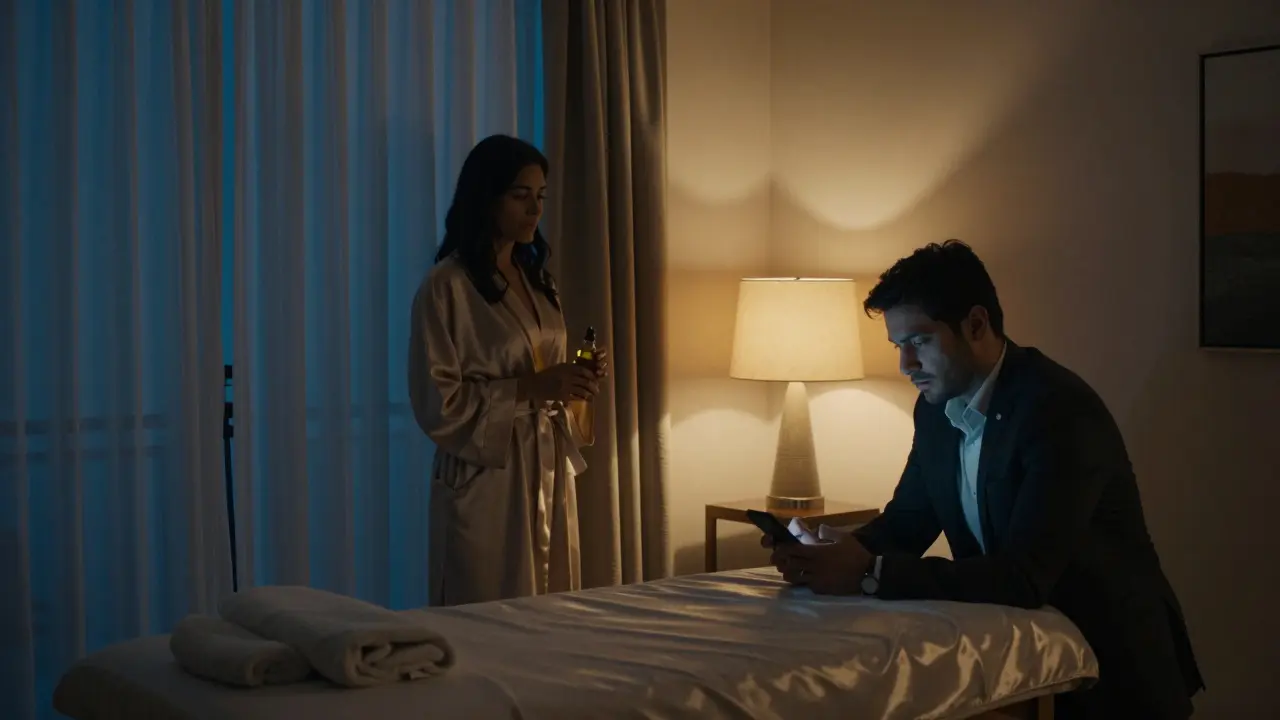
Dubai doesn’t just sell luxury hotels and desert safaris anymore. Behind the glitter of its skyline and the quiet luxury of its five-star resorts, a quieter, more controversial industry is growing - one that’s quietly reshaping who visits, why they come, and how long they stay. Sex massage, once hidden in back alleys or whispered about in hotel lobbies, is now a measurable part of Dubai’s tourism economy. It’s not legal. But it’s not disappearing either.
What Exactly Is Sex Massage in Dubai?
Sex massage in Dubai isn’t a spa treatment. It’s not Swedish or deep tissue. It’s a service where physical intimacy is the main product - often disguised as a ‘romantic massage,’ ‘couples therapy,’ or ‘private relaxation session.’ These services are offered in private apartments, unlicensed wellness centers, and sometimes even in hotel rooms arranged through third-party apps or WhatsApp groups. Clients pay anywhere from 800 to 3,000 AED per session, depending on location, duration, and perceived exclusivity.
Unlike Thailand or parts of Europe, where sex work is regulated or tolerated in certain zones, Dubai enforces strict Islamic laws. Public indecency, prostitution, and any form of commercial sexual activity are criminal offenses. Yet enforcement is uneven. Tourists from countries with looser norms - Russia, Ukraine, Saudi Arabia, and parts of Western Europe - are the primary customers. Many come knowing the risks. Others are misled by vague online ads that say things like ‘ultimate relaxation’ or ‘private intimate experience.’
Why Is This Trend Growing Now?
Two things are driving this growth: accessibility and anonymity.
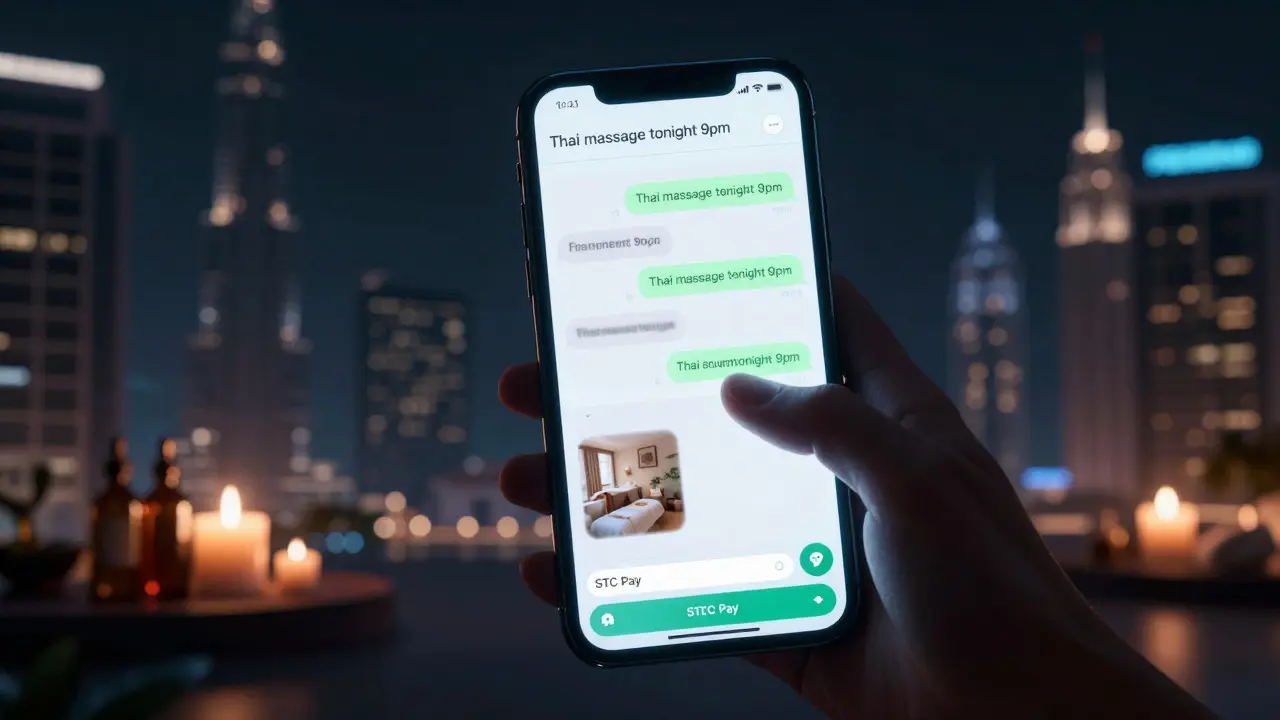
First, apps like Telegram, WhatsApp, and even Instagram have become the new brothels. Service providers use coded language - ‘Thai massage,’ ‘body oil session,’ ‘private hostess’ - to bypass automated filters. Photos are shared in encrypted groups. Payments are made via cryptocurrency or peer-to-peer apps like STC Pay. There’s no official storefront, no sign outside a door. It’s all digital, disposable, and hard to trace.
Second, Dubai’s tourism strategy has shifted. After the pandemic, the city doubled down on attracting high-spending visitors from the Middle East, Eastern Europe, and Asia. Visa policies became easier. Flights got cheaper. Luxury marketing pushed Dubai as a playground for the rich - and the curious. For many, ‘exotic’ now includes forbidden experiences. Sex massage isn’t advertised as the main attraction, but it’s quietly listed as an ‘add-on’ in travel forums and expat Facebook groups.
A 2024 report from a Dubai-based research firm found that 12% of foreign tourists who stayed more than five nights reported seeking out private intimate services. That’s up from 5% in 2020. The same report noted that 68% of these tourists said they’d return if they could find ‘safe, discreet’ options - even if they knew it was illegal.
Who’s Behind the Scenes?
It’s not organized crime. It’s not a cartel. It’s mostly individuals - women from Eastern Europe, Southeast Asia, and North Africa - who came to Dubai on tourist or domestic worker visas and turned to this work out of financial pressure. Some are single mothers supporting families back home. Others are former hotel staff or beauty therapists who lost their jobs after the 2023 economic slowdown.
Men also offer these services, though less frequently. Many are expats with no legal work rights, using their language skills and knowledge of tourist behavior to build repeat clientele. A few operate as ‘private consultants’ - offering not just massage, but companionship, emotional support, and discretion. The line between sex work and emotional labor is blurry here.
There are no official numbers, but local police say they shut down 217 unlicensed massage parlors in 2024 alone. Most were small apartments in Deira, Bur Dubai, and Jumeirah. The same places where tourists rent Airbnbs for a week-long getaway.
How This Affects Dubai’s Tourism Brand
Dubai’s government spends billions each year promoting itself as a safe, family-friendly, modern Islamic city. The Burj Khalifa, Palm Jumeirah, and Dubai Mall are the faces of this image. But behind the scenes, the city is becoming a magnet for tourists seeking experiences they can’t get at home - legal or not.
This creates a dangerous contradiction. On one hand, Dubai wants to be seen as a global luxury hub. On the other, it’s quietly becoming a destination for sexual tourism - a label that could cost it future business from conservative markets like Saudi Arabia, Kuwait, and even parts of India.
Some hotel chains have started training staff to recognize suspicious behavior: guests who check in alone but request extra towels, late-night visitors who never use the front desk, or people who ask for ‘special services’ during check-in. A few luxury resorts now ban guests who’ve been flagged in internal databases.
But here’s the real problem: tourists who use these services rarely report being scammed, overcharged, or unsafe. Why? Because they’re breaking the law too. They don’t want police involved. That silence lets the industry grow unchecked.
The Real Cost: Safety, Exploitation, and Reputation
The biggest risk isn’t arrest. It’s exploitation.
Many providers are vulnerable - undocumented, isolated, and without legal recourse. There are reports of clients withholding payment, using violence, or recording sessions without consent. When things go wrong, victims can’t go to the police without risking deportation or jail.
At the same time, Dubai’s reputation is at stake. In 2024, the UK Foreign Office updated its travel advisory to warn citizens about ‘unregulated intimate services’ in Dubai, noting that arrests for sexual services have risen 40% since 2022. Germany and France have issued similar warnings. These aren’t just moral concerns - they’re economic ones.
Travel agencies that specialize in luxury tours to Dubai are starting to pull back. One major UK operator, TravelLux, quietly removed Dubai from its ‘adult getaway’ packages after three clients were detained in 2023. They didn’t make a public statement. They just stopped selling the trips.
What’s Next for Dubai?
Dubai won’t legalize sex work. That’s not politically or culturally possible. But it also won’t stop it. The city has too much to lose - tourism brought in $32 billion in 2024, and a large chunk of that came from repeat visitors who return for reasons beyond shopping and sightseeing.
The real solution won’t come from raids or fines. It’ll come from education and transparency. Tourists need to know the risks. Providers need protection. And Dubai needs to decide: is it a city of luxury and innovation - or a place where the rules bend for the right price?
For now, the answer is both. And that’s what makes this trend so dangerous - and so hard to ignore.
Is sex massage legal in Dubai?
No, sex massage is not legal in Dubai. Any form of commercial sexual activity, including massage services that involve sexual acts, is prohibited under UAE law. Violators - both providers and clients - can face fines, deportation, or imprisonment. Even if the service is offered discreetly or labeled as a ‘wellness session,’ it’s still illegal.
Can tourists get arrested for using sex massage services in Dubai?
Yes. Tourists have been arrested for participating in sex massage services. Police conduct undercover operations and respond to tips from hotel staff or neighbors. Even if you pay in cash and no one sees you, digital traces - like WhatsApp messages, payment apps, or hotel CCTV - can be used as evidence. Arrests are more common during major events like Dubai Shopping Festival or Expo City events when tourist numbers spike.
How do people find sex massage services in Dubai?
Most services are found through encrypted apps like Telegram and WhatsApp. Listings use coded language - ‘Thai massage,’ ‘private hostess,’ ‘body oil treatment’ - to avoid detection. Some are promoted on expat Facebook groups or travel forums like Reddit’s r/Dubai. Instagram accounts with private profiles also share photos and contact details. It’s not advertised on Google or Booking.com - it’s hidden in plain sight.
Are there safe alternatives to sex massage in Dubai?
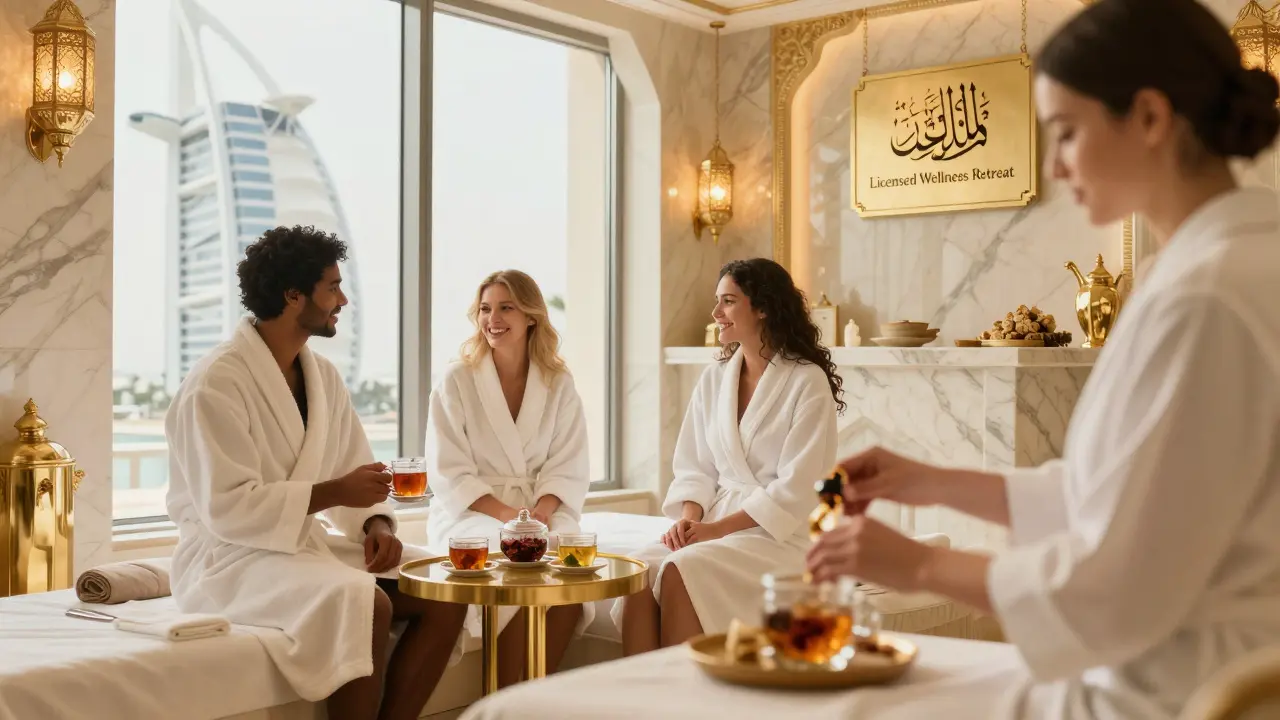
Yes. Dubai has many licensed, high-end spas that offer romantic couple’s massages, aromatherapy, and wellness retreats - all fully legal and safe. Places like The Spa at Burj Al Arab, Talise Ottoman Spa, and Zabeel Saray Spa provide intimate, relaxing experiences without crossing legal lines. These services cost between 600 and 1,500 AED and are popular with couples looking for luxury, not legality-bending thrills.
Why don’t more tourists get caught?
Most tourists who use these services are careful. They avoid public places, use cash, and don’t leave digital trails. Police resources are limited, and enforcement is often reactive - not proactive. Arrests usually happen after complaints from neighbors, hotel staff, or if a client reports being scammed. But since most clients don’t report crimes (because they’re the ones breaking the law), many cases go unnoticed.
Is this trend affecting Dubai’s tourism numbers?
It’s not hurting overall numbers - Dubai still welcomed over 17 million tourists in 2024. But it’s affecting the quality of tourism. Luxury brands and family-oriented tour operators are pulling back from marketing Dubai as a destination for ‘adult getaways.’ Some countries have issued travel warnings, which may deter future visitors. The real risk isn’t fewer tourists - it’s the kind of tourists who come.